

Istanbul is a city that not only connects two continents, Asia and Europe, but also connects the west with the east of the world. Due to its geographical position, it has always become an important center for living throughout history. Istanbul was established in the 17th century B.C and it was hosted many different civilizations. It served to be the point of unification of cultures, religions and civilizations. It became the capital of three giant empires all through history, the Roman Empire, the Byzantine Empire and the Ottoman Empire. Istanbul brings together in an incomparable geography the structures that were the products of different civilizations thanks to this splendid past. It was enlisted as the UNESCO World Heritage in 1985.
TOP 3 PLACES TO VISIT in Istanbul
- AYA SOFIA

There are many important monuments in İstanbul, but this venerable structure – which was commissioned by the great Byzantine emperor Justinian, consecrated as a church in 537, converted to a mosque by Mehmet the Conqueror in 1453 and declared a museum by Atatürk in 1935.
2. BLUE MOSQUE
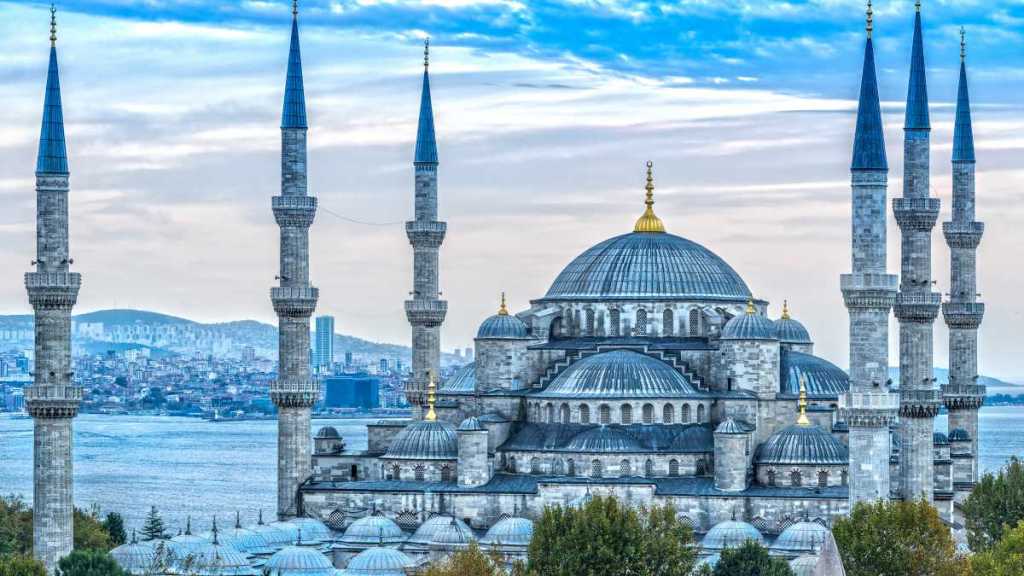
Istanbul’s most photogenic building was the grand project of Sultan Ahmet I. The mosque’s wonderfully curvaceous exterior features a cascade of domes and six slender minarets. Blue İznik tiles adorn the interior and give the building its unofficial but commonly used name.
3. GRAND BAAZAR

The colourful and chaotic Grand Bazaar is the heart of İstanbul’s Old City and has been so for centuries. Starting as a small vaulted bedesten (warehouse) built by order of Mehmet the Conqueror in 1461, it grew to cover a vast area as lanes between the bedesten, neighbouring shops and hans (caravanserais) were roofed and the market assumed the sprawling, labyrinthine form that it retains today.
WHEN TO GO
The best times to visit Istanbul are from March to May and between September and November. That’s when crowds at the city’s attractions are manageable, room rates are average and daytime temperatures generally sit between the 60s and 70s Fahrenheit degrees. Peak season – from June to August – sees temps soar into the low 60s to low 80s, and accommodation prices increase to match the demand from incoming tourists. December through February, meanwhile, are the cheapest months to visit, but Istanbul’s rainy, snowy and chilly conditions (temps are in the high 30s to high 50s) mean you’ll have to don cold weather attire and lug an umbrella during your stay.


















































 English Blog